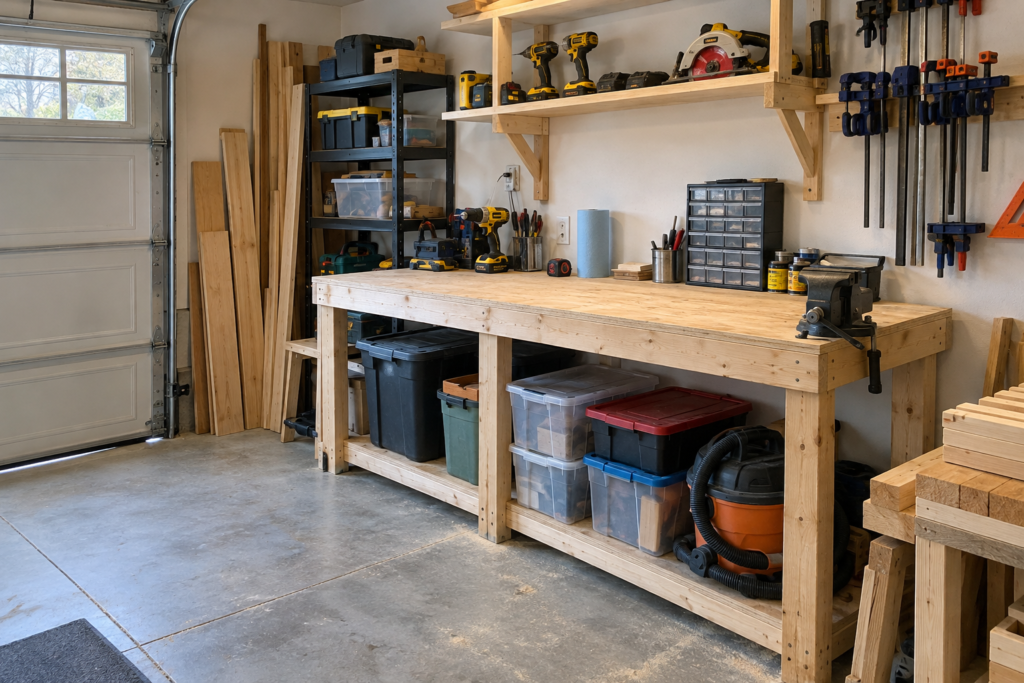
A useful workshop starts with a clear place to work. You do not need to copy a large professional shop. Start with one manageable work area, keep essential items nearby and improve the setup as you discover what you use most.
Choose the working area before buying storage
Sketch the garage and mark doors, vehicles, fixed shelves and anything that must remain accessible. Think about how you will bring a board in, support it while working and carry the finished project out. A layout that looks tidy can still be awkward if there is no clear route through it.
Give every project a temporary home
Decide where unfinished pieces can stay between sessions. A labelled shelf or box for the current project keeps screws, small parts and notes together. This is especially helpful when the garage must return to other uses during the week.
Keep frequently used tools within reach
Begin with a modest storage zone for measuring tools, a pencil, the drill and the clamps you regularly use. Leave spare room. Your storage should follow the work you actually do, rather than forcing you to buy more tools to fill an impressive wall.
Separate usable offcuts from clutter
Give scrap wood one defined container. Label useful pieces with their dimensions, and review the container when it fills. A small number of organised offcuts is easier to use than a pile that blocks access to your bench.
Plan lighting and cleanup
Check whether your body casts a shadow over the marking and assembly area. Arrange suitable lighting so you can see the work clearly. Include dust collection and cleanup in the layout, and follow your equipment instructions for safe operation and electrical supply. Keep exits clear.
Try the layout before making permanent changes
Walk through your next project without turning on a tool. Where will you measure? Where will materials wait? Where will clamps go during assembly? Move portable storage until the sequence feels practical. This rehearsal costs less than building cabinets in the wrong place.
Start with a clear bench, stable work support and an organised project box. Add storage when a repeated problem tells you what is missing.
Further reading: Kreg’s guide to planning a home woodworking workshop.